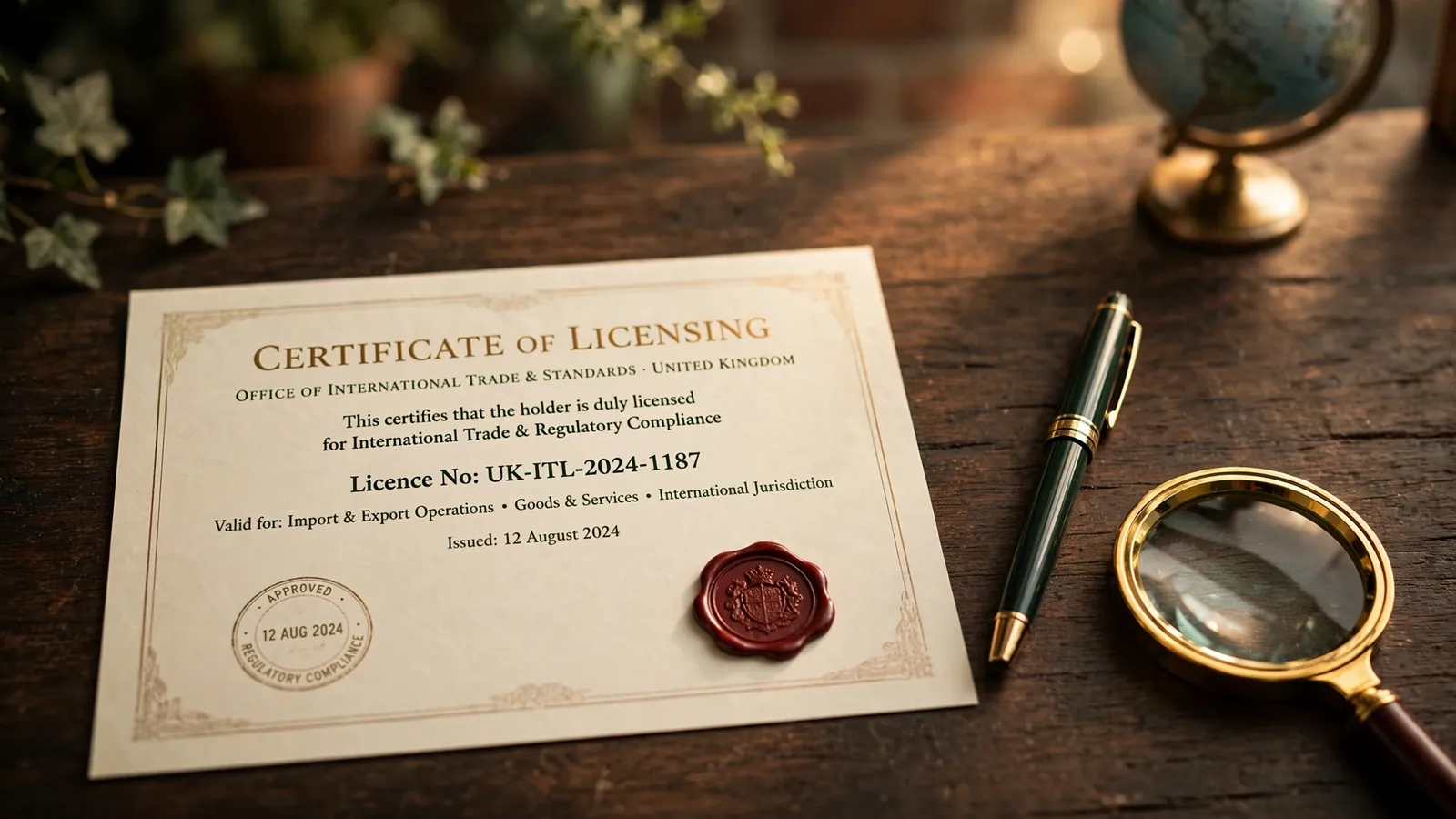
Online Casinos with Malta MGA Licences: UK Checks
 Available in GB
A Malta licence signals regulation in Malta, but Great Britain requires a separate operating licence for remote gambling.

Table of Contents
- What a Malta Licence Does—and Doesn’t—Tell You
- MGA Casinos and the UK: The Licensing Check That Matters
- How to Check Who Regulates a Malta Casino
- Choosing a Malta Casino Without Relying on a ‘Best’ List
- What to Check on a Casino Site Before You Sign Up
- Malta Casinos for UK Players: Protections Depend on the Licence
- Malta Casinos Outside GamStop: Know What You’re Giving Up
- Bonuses: Read the Wagering Terms Before You Deposit
- New Malta Casino Claims in 2026: Check the Licence, Not the Label
- Malta Online Casinos: The Short Version for UK Readers
What a Malta Licence Does—and Doesn’t—Tell You
A Malta Gaming Authority (MGA) licence tells you that an operator is authorised within Malta’s gambling framework. For a player, that is a meaningful piece of information: it is more than a casino simply describing itself as “based in Malta”. MGA licensees must keep player funds in segregated accounts held with an approved financial institution, separating that money from the operator’s ordinary business funds.
That is a specific safeguard, not a promise that every possible problem is covered. A licence does not tell you, by itself, how a particular dispute will end, whether a site’s service suits you, or what rules apply where you live. I treat the Malta label as information about the operator’s regulatory connection, not as a blanket quality mark.
The distinction matters if you are in Great Britain. A Malta online casino licence does not replace the operating licence required to provide remote gambling to customers here. An operator must hold a UK Gambling Commission licence to offer those facilities to people in Great Britain, wherever the company is physically located. Malta and Great Britain are separate regulatory jurisdictions; holding permission in one does not automatically provide permission in the other.
So, when you see “MGA licensed” on a casino, read it narrowly. It speaks to the operator’s status under the Malta authority. It does not, on its own, establish that the operator is licensed for the British market. A company can have a real connection to Malta and still lack the separate authority needed to serve customers in Great Britain.
This is where wording can do a lot of work. “Malta licensed” may sound like a broad assurance, but it is not a substitute for asking which regulator’s rules govern the service you are being offered. Nor does an MGA licence turn an overseas site into a UKGC-licensed one by association. The licence belongs to the regulatory system that issued it.
Online Casino No Registration UK: What It Means
The same point applies whether a site calls itself an MGA casino, a Malta-licensed online casino or simply says it holds a Malta licence. Those phrases describe the claimed Malta connection; they do not change the jurisdictional boundary. The practical meaning comes from the actual authority and the market the operator is serving, not from the wording on a banner.
I would therefore separate two questions in my mind: what does the Malta licence say about the operator, and does that answer the licensing question for a customer in Great Britain? The segregated-funds requirement is a concrete feature of MGA licensing. The British requirement is separate and tied to providing remote gambling here. One does not cancel the other.
That is the limit of the label. It can tell you something real about the operator’s regulatory position in Malta, including a specific arrangement for holding player funds. It cannot, by itself, settle whether the operator has the authority required for the British market. Two different questions.
MGA Casinos and the UK: The Licensing Check That Matters
A Malta Gaming Authority licence and permission to serve customers in Great Britain are separate things. If you live in England, Scotland or Wales, the practical question is whether the operator holds a UKGC licence for the gambling service it offers you. A Malta licence does not take the place of that requirement.
This can be easy to miss when a site presents its MGA credentials prominently. That licence relates to oversight by Malta’s regulator; it does not, by itself, authorise the operator to provide real-money online gambling to customers in Great Britain. The operator’s physical location does not change the rule. What matters is that it is offering remote gambling to people in this part of the UK.
I would keep the check plain: establish whether the site is offering gambling to you as a customer in Great Britain, then look for its UKGC licence. Do not treat a Malta address, an MGA badge or the phrase “licensed in Malta” as an answer to that UK-facing question. Those details may describe the operator’s other regulatory position, but they do not establish that it can lawfully serve the British market.
Licensing Requirement
A Malta MGA licence does not authorise an operator to provide gambling services to customers in Great Britain; only a UKGC licence permits this lawfully.
There is a geographical wrinkle. The Gambling Commission’s remit under the Gambling Act 2005 covers England, Scotland and Wales. Northern Ireland has a different regulatory arrangement, so the Great Britain rule should not be casually extended to it. If you are in Northern Ireland, check the rules that apply there rather than assuming the same UKGC position.
For customers in Great Britain, online real-money gambling is lawful only when the operator holds the required UKGC licence. So a Malta-based site, or one described as an MGA casino, is not enough on its own. The label can be accurate and still fail to answer the question that matters where you live.
This is not a matter of choosing the more impressive badge. It is about matching the operator’s permission to the place where it is offering the service. If the only licence presented is from Malta, that does not satisfy the Great Britain requirement. Keep the distinction in mind before you create an account or pay in. Short version: Malta is not a substitute.
Our top casino picks for the UK
- Revery PlayBonus: 100% up to€1,000+ 100 FS · Payout speed: 1-3 business days
- NightWinBonus: £900 + 400 free spins · Payout speed: 1-3 business days
- AmunbetBonus: Join now and get 450% up to 2,700 GBP + 450 FS · Payout speed: 1-3 business days
- ChanzeBonus: Slots Welcome Bonus #1 200% up to €500 · Payout speed: 1-3 business days
- DieselwinBonus: Welcome Pack 250% up to £4000 + 200 FS · Payout speed: 1-3 business days
- SpinFormulaBonus: 550% Up To £15,000 + 550 FS · Payout speed: 1-3 business days
- WinBeastBonus: €5000 + 500 FS + €650 Freebet · Payout speed: 1-3 business days
- SlotoSportBonus: 500% up to £ 10 200+ 777 FS · Payout speed: 1-3 business days
How to Check Who Regulates a Malta Casino
A Malta badge in a footer is a claim, not proof. When I check whether an online casino is regulated by the Malta Gaming Authority (MGA), I start with the operator’s legal name, not the brand name on the homepage. A group can run several brands, and the company named in the terms may be different from the one a logo leads you to expect.
Gibraltar Casino Licence and UK Player Protections
Look for the licensing information on the casino’s own site, often in its footer or terms and conditions. Note the exact company name and any licence reference shown. Then check the MGA’s official website and look for the operator there. The authority’s website is the place to verify a regulator claim; a casino’s own wording, logo or link is not independent confirmation.
Compare details carefully. Does the listed company match the company named in the casino’s terms? Does the information correspond to the site you are visiting, rather than another brand operated by the same group? If the names do not line up, or the casino gives no clear company details, pause rather than filling in the gaps yourself. A similar name is not the same thing.
Be wary of copied-looking badges, vague statements such as “MGA regulated”, and licence references that cannot be matched to the authority’s information. A genuine regulator’s name can be used misleadingly. I treat a claim as unresolved until the operator and the relevant details can be checked against the official source.
You may also see pages described as a Malta Gaming Authority casino list or a list of MGA-licensed casinos. Treat third-party directories as starting points only: they can be out of date, and a listing does not establish that a particular site is covered. Check the authority’s own information for the named operator instead.
Verifying MGA Licences
Identify the legal name
Find the operator’s official company name in the casino’s footer or terms and conditions, not just the brand name.
Search the official source
Visit the Malta Gaming Authority’s official website and search for the identified company name.
Compare the details
Verify that the company name and licence reference on the authority’s site match exactly with the details provided by the casino.
Keep the scope clear, too. Confirming that an operator appears in MGA information tells you about the regulator it claims to answer to; it does not mean the UK Gambling Commission has approved that overseas licence. The Commission does not approve offshore licences, and it does not handle complaints about operators licensed outside the UK. One check cannot stand in for another.
If you cannot confirm the operator’s identity or the licence claim, do not deposit while you try to make sense of it. A polished site is not evidence.
Choosing a Malta Casino Without Relying on a ‘Best’ List
A ranked list can make choosing a Malta casino look easier than it is. A site may appear near the top because it paid for attention, suits the list-maker’s criteria or has a polished presentation. None of that tells you whether it is appropriate for someone playing from Great Britain.
I would start with the question that matters most to you as a UK player: is the operator licensed by the UK Gambling Commission to serve customers here? The Commission oversees gambling in Great Britain. A Malta connection, familiar games or a generous-looking offer is not a substitute for that local authorisation. If a list calls a site one of the best MGA casinos but gives no clear basis for its recommendation, treat the ranking as a sales pitch, not a decision.
Online Casino With No Sister Sites in the UK
Then consider what you actually want from a casino. If you are comparing slots, roulette or the general range of games, decide which matters to you before a site’s design or bonus gets in the way. A long catalogue is not automatically a good fit, and a short list of supposedly exceptional sites will not settle the question for you. Your choice should be based on information you can assess, not a label that sounds reassuring.
Bonuses need the same restraint. Searches for the best Malta casino bonus can lead you towards offers that look impressive at first glance, but the headline alone cannot tell you whether an offer suits your plans. Read its conditions before you deposit, and do not treat a large-looking promotion as evidence that the casino itself is a sound choice. Keep the offer separate from the operator assessment; they are different decisions.
I would also look for a clear route if something goes wrong. UKGC-licensed operators must use an approved Alternative Dispute Resolution provider for player complaints. That gives you a concrete point to check when comparing UK-facing options: does the operator identify its complaint process and the relevant independent dispute route? A vague promise to “help” is not the same thing as knowing how a complaint can be taken forward.
There is no reliable shortcut in an MGA casino list, whether it covers bonuses, slots or roulette. Use any list only to find names to assess, never as proof that a casino is right for you. Be wary of rankings that blur the difference between a Malta association and permission to serve Great Britain, or that describe a site as best without explaining what the judgement rests on.
Do
- Prioritise the UKGC licence check
- Research specific bonus wagering terms
- Identify the approved ADR provider
Don’t
- Rely on ranked “best” lists
- Assume a Malta licence equals UK permission
- Treat large bonuses as proof of quality
The same applies if a casino is presented as a place to use cryptocurrency. A payment method does not answer the licensing question, and it should not distract you from it. Make your shortlist around the operator’s standing for the market you live in and the practical protections attached to that standing. Then compare the entertainment and offers on their own terms.
That is less exciting than a league table. It is also more useful: choose by the licence and complaint route that apply to you, not by someone else’s unexplained winner.
What to Check on a Casino Site Before You Sign Up
Before creating an account, I look for the practical information that would matter if something went wrong: what happens to my balance if the business fails, and who can help if I cannot resolve a complaint with the operator? On Malta casino sites, those details should be clear on the site, not buried behind vague assurances.
How customer balances are protected
Find the section explaining what happens to customer money if the operator becomes insolvent. A general promise that funds are “safe” is not the same as an explanation of how balances are handled. Read the wording and check that it describes the arrangement, rather than relying on a badge or a line in promotional copy.
For a UKGC-licensed operator, player funds must be kept separate from the company’s operational money. That separation is intended to protect customer balances if the casino goes bankrupt. Look for the site’s explanation of its customer-funds arrangements and whether it says how those arrangements apply to you. If the wording is hard to find or says little beyond “your money is secure”, ask the operator for a clear answer before depositing.
Anjouan Casino Licence in the UK: What It Means
This is worth checking even when a site looks polished. A smart design does not explain what happens to your balance. Dry, but important.
The complaint route
Find the complaints policy before signing up. It should tell you how to raise an issue with the operator and what happens if you and the operator do not agree. Keep a copy of the relevant terms or take a screenshot; it is easier to refer to the stated process later than to reconstruct it from memory.
UKGC-licensed operators must use an approved Alternative Dispute Resolution provider for player complaints. Under a UKGC licence, you first take the complaint through that provider; if it remains unresolved, you can then raise it with the Gambling Commission. Check that the site explains this route and identifies its ADR provider. A complaint button alone does not tell you where an unresolved case goes.
If the site describes only its own customer-service team and gives no clear next step, that is a useful warning about how much recourse you may have. Do not assume a complaint process in another jurisdiction works like the UK one.
Make the information easy to find
I would check the footer, the terms, the payments information and the complaints page, rather than treating the homepage as the whole story. Look for consistent details: the operator’s name, the applicable terms, the way balances are treated, and the route for disputes. If those pages contradict one another, ask for clarification and keep the response.
Before Signing Up
- Locate the section on customer balance protection during insolvency
- Find the formal complaints policy and ADR provider
- Verify that the operator’s name is consistent across all pages
- Read the specific terms for any promoted bonus or slot
The same applies when a site is promoting Malta casino bonuses or online slots. Attractive offers and game menus do not answer basic questions about money or complaints. Read the relevant account and promotion terms separately, but do not let them distract you from the operator’s published policies.
A site may state that it is connected with Malta, but that label alone does not tell you what protections apply to a customer in Great Britain. Focus here on what the site actually says about your balance and your options if there is a dispute. If the explanation is missing, unclear or evasive, pause before you register.
Malta Casinos for UK Players: Protections Depend on the Licence
A Malta-based casino may be reachable from Great Britain, but access is not the same as permission to offer gambling here. If an operator provides remote gambling to customers in England, Scotland or Wales, it must hold a UK Gambling Commission licence, wherever its business is physically based. A Malta licence does not take the place of that requirement.
That distinction matters once something goes wrong. The licence governing the service determines which rules apply and which regulator can deal with the operator. A site’s location, branding or willingness to accept a British customer does not, on its own, give you the protections attached to a UKGC licence.
What a UKGC licence means for you
UKGC-licensed operators have to provide ways for customers to manage gambling and respond when play suggests harm. These include deposit and loss limits, session controls, time-outs and self-exclusion. Operators must also monitor for signs of gambling harm and intervene when needed. The protections are part of the regulatory framework, not favours a casino can offer at its discretion.
There are also rules around age checks: a licensed operator must confirm you are at least 18 before you can deposit or play. If you are comparing Malta online casinos from Great Britain, the relevant question is therefore not simply whether a site says it is regulated. It is whether the operator serving you holds the licence required for this market.
Curacao Casino Licence UK: What the Label Means
Customer money is another practical difference. UKGC licensees must keep player funds separate from the money used to run the business, so customer balances are protected if the operator becomes insolvent. That separation does not mean every possible financial problem disappears, but it is a defined protection under the UK system.
The rules also govern how complaints can move beyond the casino’s own support team. A UKGC-licensed operator must provide access to an approved Alternative Dispute Resolution provider. You first take an unresolved complaint to that provider; if it remains unresolved, it can then be escalated to the Gambling Commission. There is a route with named stages. That is useful when a disagreement concerns a balance or a decision the operator will not change.
What changes at a non-UKGC site
At a casino operating outside the UKGC system, you should not assume those protections follow you across the border. The UK Gambling Commission does not approve offshore licences, has no reciprocal agreements with offshore regulators, and does not handle complaints about operators licensed outside the UK. So if a dispute arises with a Malta casino that does not hold the required UKGC licence, you cannot rely on the UKGC complaint route to resolve it.
This is the point that can get lost when a site looks polished and accepts customers from Britain. A familiar interface, a Malta address or a page describing regulatory oversight does not place the operator under UK rules. Nor does it make the UK regulator responsible for your case. The operator may have a regulator elsewhere, but that is a different relationship, and UKGC protections should not be assumed to apply.
Casino Without a Swedish Licence: UK Rules Explained
You may also see gambling tools on a non-UKGC site. Their presence can be useful, but it does not make the site equivalent to one governed by the UKGC. The important distinction is not whether a button or policy exists; it is which regulator has authority over the operator and what formal route you have if the operator fails to follow its obligations.
Think about the point where help is needed
When people compare MGA casinos for UK players, they often focus on whether they can open an account or access the games. I would put the less exciting question first: who is accountable if your money, account or complaint becomes a problem? A site being available to you answers the access question. It does not answer the accountability one.
If the operator holds a UKGC licence, you can expect the protections and complaint arrangements attached to that licence. If it does not, the UKGC will not step in as your complaint handler, and UK safeguards cannot simply be presumed to cover the site. That is a real difference, not fine print.
GamStop is also part of the UK framework: UKGC-licensed operators must participate in the national scheme, while offshore casinos do not. The details of self-exclusion are worth considering separately, but the basic point here is that protections are tied to the licence and jurisdiction, not to the casino’s claimed location. A Malta label cannot bridge that gap.
For a player in Great Britain, the sensible comparison is between the protections you can actually call on and those you may only see described on a site. If a casino is not licensed by the UKGC to serve customers here, do not treat it as though it were. Reachability is not regulation.
Malta Casinos Outside GamStop: Know What You’re Giving Up
A Malta label does not tell you whether a casino is part of GamStop. The key distinction is whether the operator holds a UKGC licence: operators licensed by the UK Gambling Commission must participate in the national self-exclusion scheme. Non-UKGC licensed casinos, including offshore sites, do not participate in GamStop.
Attention: An exclusion via GamStop does not automatically block your access to offshore or MGA-licensed casinos that do not hold a UKGC licence.
That matters if you use the scheme to block your access to gambling. GamStop can exclude you from all UKGC-licensed gambling sites for six months, one year or five years. An exclusion made through it does not extend to an offshore casino just because that site accepts customers from Britain or says it is licensed in Malta. Different jurisdictions, different arrangements.
I would treat “not on GamStop” as a description of what the site does not connect to, not as a special kind of protection. If you have excluded yourself through GamStop, an MGA-licensed casino outside the scheme may still be accessible. The exclusion does not automatically follow you there.
The same goes the other way. Do not assume an account restriction or self-exclusion you set with one casino will apply across other operators. GamStop’s reach is across UKGC-licensed gambling sites; offshore casinos are outside that scheme. A Malta licence does not make the arrangements interchangeable.
If you are looking at a Malta casino because it is not on GamStop, pause before registering. That may be precisely the access you were trying to prevent. If you want to self-exclude, use GamStop for UKGC-licensed sites and do not rely on it to block non-UKGC licensed casinos. For support with gambling harm, you can contact a specialist support service; an offshore site’s status does not change what you have chosen to do for yourself.
There is no clever workaround here. Know what the exclusion covers before you act, and do not mistake a Malta connection for participation in a UK scheme.
Non-GamStop Curaçao casino sites: what to check
Bonuses: Read the Wagering Terms Before You Deposit
A Malta casino bonus can look like extra money in your balance, but the key detail is whether it is bonus cash or cash you can withdraw. Wagering requirements set how much you must stake on eligible games before bonus funds, or winnings linked to them, become withdrawable. Read the offer terms before depositing; the headline amount tells you little on its own.
The calculation is simple: multiply the bonus by the wagering multiple. A specialist affiliate review uses a £20 bonus with a 35x requirement as an illustration: that means £700 in qualifying bets before the bonus converts to withdrawable cash. That is an example, not a standard UK offer. UK rules cap wagering requirements on promotions at 10x, so check that any offer aimed at you fits the rules that apply to the operator.
The amount you stake may not all count. Slots can contribute the full value of a bet towards wagering, while table games may contribute only a fraction or nothing. The precise contribution depends on the offer terms. If a game contributes less, you may need to place more total bets to reach the stated qualifying amount. Check which games are eligible, whether bets made with bonus funds count, and what happens if you withdraw before completing the requirement.
A Malta online casino bonus labelled “no deposit” still comes with conditions. In Great Britain, you must be physically located there to claim a no-deposit offer. Read the eligibility rules and any playthrough requirement rather than assuming that “no deposit” means “no strings attached”. It doesn’t.
In Great Britain, wagering requirements for promotions are capped at 10x.
If you are considering an offer advertised in bitcoin, apply the same checks: identify the wagering multiple, the qualifying games and the rules for withdrawing. A payment method does not change what the bonus terms require. Keep the offer page or terms available while you play, so you can compare the progress shown in your account with the conditions you accepted. If the wording is unclear, pause before opting in or depositing. A bonus is only useful if you understand what you must do before you can access the money.
New Malta Casino Claims in 2026: Check the Licence, Not the Label
A casino described as a new Malta online casino may be newly launched, newly branded or simply new to you. The wording tells you nothing by itself about who regulates the operator. A Malta address or an MGA claim is not evidence that the site is authorised to take customers in Great Britain.
For a player in England, Scotland or Wales, the relevant point is whether the operator holds a UKGC licence. Any operator providing remote gambling to consumers in Great Britain must have one, wherever its business is physically based. Offering gambling services to UK consumers without that licence is illegal for the operator.
That is why a launch date should not distract you from the licensing question. “New for 2026” is a description, not a regulatory status. Nor does a payment option settle the matter: seeing Neteller listed, for instance, would not establish that a site is permitted to serve you.
I would treat a new MGA casino’s claims as claims until the operator’s status is clear. Don’t infer approval from a Malta label, a fresh design or confident wording on a landing page. The same goes for a site that says it has just opened: a recent launch does not change the requirement for a UKGC licence when it offers remote gambling to Great Britain.
Keep the distinction simple. Malta may describe where an operator is based or the regulator it says oversees it. For Great Britain, the required licence is the UKGC licence. The label is not the licence.
Malta Online Casinos: The Short Version for UK Readers
A Malta connection can tell you something about where an operator is based or which regulator it says oversees it. It does not, by itself, answer the question that matters if you are in Great Britain: is the operator licensed to provide online gambling here?
That distinction is easy to lose when a site describes itself as Malta-licensed, or when a list calls it one of the best online casinos in Malta. Those labels may sound reassuring, but they are not a substitute for the licence relevant to your location. I would start with that point and treat the Malta label as background, not a decision.
The UK Gambling Commission regulates gambling in Great Britain. An operator providing remote gambling facilities to consumers here must hold a UKGC licence, wherever the company is physically based. So a Malta address or an overseas operating licence does not remove that requirement.
“Best” depends on what you mean
People looking for the best Malta casinos may be trying to find a well-known operator, a particular range of games, or a site that accepts real-money play. Those are different questions, and a ranking rarely answers the one that matters most: whether the operator is licensed for customers where you live.
A top-ten list can make several sites look interchangeable. They are not. Before weighing up a casino’s design, games or promotions, establish whether it is licensed to serve Great Britain. If the answer is unclear, a favourable ranking does not clear it up.
The same goes for claims about a newly launched casino. “New” describes how long a brand has been around; it does not establish what licence it holds or which customers it may serve. A Malta connection is not proof of permission to offer gambling in Great Britain.
There is no need to force a list of Malta casinos into a decision that depends on your own jurisdiction. A useful comparison begins with the operator and the licence that applies to you, not with a badge, a launch date or a list position.
Keep the location question simple
For someone in England, Scotland or Wales, the practical question is not simply whether a casino has a Malta licence. It is whether the operator has the UKGC licence required to provide remote gambling to consumers in Great Britain.
That is the line I would keep in mind when reading descriptions of Malta-licensed casinos. A site may be connected to Malta and still need the appropriate UKGC licence to serve customers here. One fact does not replace the other.
This also helps separate information from promotion. A page can describe an operator as “licensed”, “regulated” or “trusted” without making clear which authority the words refer to. Read the claim in its proper context. If it only points to a regulator outside the UK, do not treat that as confirmation that the operator is licensed for Great Britain.
I would not read a Malta licence as a blanket approval that travels with the casino wherever it operates. Regulators oversee operators within their own legal frameworks. The relevant question is the licence required in the place where the gambling service is being offered.
A quick way to orient yourself
When a site presents itself as a Malta casino, pause before moving on to its games or offers. Ask which customers it is addressing and which regulator is responsible for the service offered to them. If you are in Great Britain, the answer needs to account for the UKGC requirement, not just the operator’s overseas credentials.
If a page presents a Malta connection as the main reason to trust a casino, that is not enough for a decision. Nor is a “best” label. Neither tells you, on its own, whether the operator holds the licence required to provide remote gambling to people in Great Britain.
This is a narrower test than judging every part of a casino, but it is the right starting point. It prevents a common mix-up: treating a Malta-based or Malta-licensed operator as automatically authorised for the British market. The company’s physical location does not change the licensing requirement for serving consumers here.
So, when you are comparing Malta online casinos, put the jurisdiction first. For Great Britain, look for the UKGC licence relevant to the operator’s service. Then make any further comparison on its own terms. A Malta label can be useful context; it is not the answer to the British licensing question.
That is the short version: judge the operator by the licence required where you live, not by the Malta label alone. A list may help you discover names, but it cannot make that distinction for you.
How can you check whether an online casino is legal?
If you’re in Great Britain, check whether the operator holds a UK Gambling Commission licence for the service it offers you. Check the operator’s legal name, not just the casino brand; an MGA licence alone does not authorise it to serve customers in Great Britain.
Are offshore casinos legal for UK players?
In Great Britain, an offshore operator must hold a UK Gambling Commission licence to offer you online gambling. A licence from Malta or another offshore regulator does not replace it.
Can I still play at non-UKGC casinos if I’m based in the UK?
If you’re in England, Scotland or Wales, an operator without a UK Gambling Commission licence is not authorised to offer you online gambling. Northern Ireland has a separate regulatory regime, so check the rules that apply there.
Who can claim a 50 free spins no deposit no wager offer?
You must be physically located in Great Britain to claim a no-deposit offer. Gambling operators must also verify that you are at least 18 before you play.
Published by the Legionbet team.