Casino Without a Swedish Licence: UK Rules Explained
 Available in GB
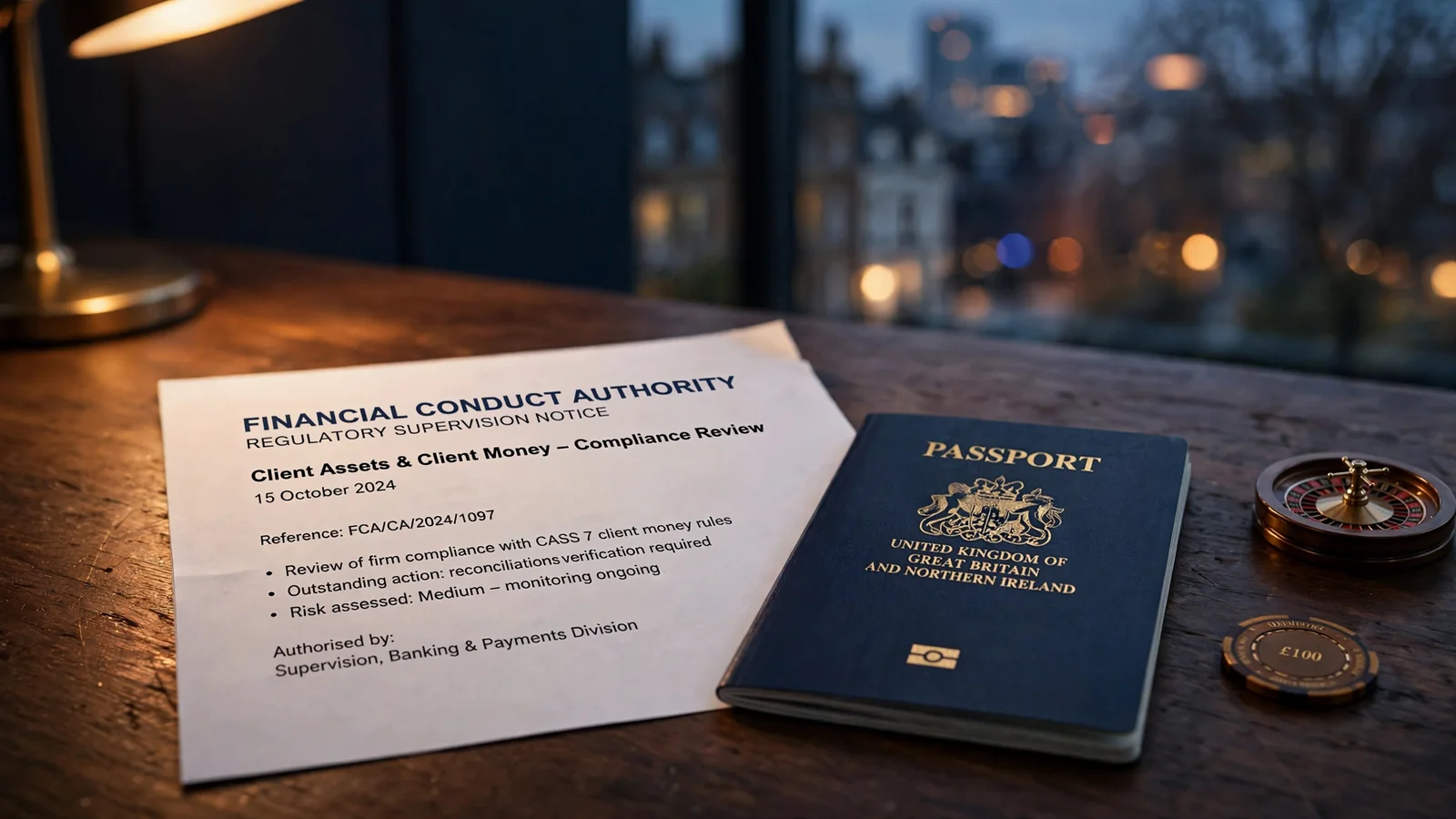
A foreign gambling licence does not itself authorise an operator to serve customers in Great Britain or provide UKGC safeguards.

Table of Contents
- What “Without a UK Licence” Actually Means
- GamStop Won’t Cover Every Gambling Site
- New Offshore Casinos: Check the Terms, Not the Launch Hype
- A Swedish Licence and a UK Licence Are Different Questions
- What UK Law Says About Players and Offshore Sites
- What an Anjouan Licence Does—and Doesn’t—Provide
- Payments and Withdrawals Can Follow Different Rules
- The Safeguards You Give Up Outside UKGC Regulation
- How to Assess a Non-GamStop Casino Without a “Best” List
- No-Deposit Bonuses: Read the Wagering Terms First
What “Without a UK Licence” Actually Means
When a site is described as operating without a UK licence, the key point is that it is not under the oversight of the UK Gambling Commission (UKGC). That does not necessarily mean the casino has no licence at all. Many non-UK-regulated casinos hold permission from another jurisdiction, such as Malta, Curaçao, Gibraltar or Anjouan. The distinction is easy to miss: a licence issued elsewhere is not the same as authorisation to serve customers in Great Britain.
I’d start by separating two questions: who regulates the operator, and where the operator is authorised to offer gambling. A foreign licence answers the first question only in relation to its issuing jurisdiction. It does not, by itself, establish that the casino can legally serve the British market.
For operators serving customers in Great Britain, the UKGC licence requirement applies regardless of where the company is based. A business operating from abroad does not get an exemption simply because its offices, servers or licence are elsewhere. So an online casino without a UKGC licence is outside the UKGC system, even if it displays a foreign regulator’s name or logo.
That is what the phrase “without a UK licence” is getting at. It describes the operator’s regulatory position in Britain, not necessarily its entire licensing history. A casino may be licensed in another country while lacking the permission required to serve Great Britain. Conversely, a foreign name on a website is not enough on its own to tell you what the licence covers. You need to distinguish the regulator named by the operator from the authority responsible for the market where you are based.
A foreign licence is not a UK licence
The difference is not just a matter of paperwork. Regulatory permission is tied to the jurisdiction that issues it and the markets in which the operator is allowed to work. A Malta, Curaçao, Gibraltar or Anjouan licence should therefore be read as a claim about that jurisdiction’s framework, not as a substitute for UKGC authorisation.
Online Casino With No Sister Sites in the UK
I’ve found that the wording on casino sites can blur this distinction. A page may put a foreign licence number beside familiar UK-facing language, making the site look more locally established than it is. Those details do not turn an overseas licence into a UK one. Nor does a polished website, a British-themed promotion or support in English alter who regulates the operator.
This is why “licensed” is not a complete answer when you are assessing a non UK licensed casino. The useful follow-up is: licensed by whom, and authorised to serve which market? If the answer names a regulator outside the UK, that tells you the operator is not under UKGC oversight. It does not prove that it holds the authorisation needed for Great Britain.
What the label does—and doesn’t—tell you
The label is useful, but it has limits. It tells you that the casino operates outside the UKGC regulatory system; it does not, by itself, explain the full terms of a foreign licence or establish how a particular operator behaves. Two casinos with licences from different jurisdictions may have different rules and operating arrangements. Even casinos licensed in the same place may not present the same experience.
I would avoid treating “foreign” as a synonym for “unlicensed everywhere”. Some non-UK-regulated casinos do have licences from other jurisdictions. But the opposite mistake is just as common: assuming that any licence shown on the site makes it a UK-authorised casino. Neither conclusion follows from the word “licensed” alone.
The same care applies to phrases such as “international casino” or “online casino without a UK licence”. They describe a broad category, not a guarantee about a particular site. The operator’s home base, the regulator it names and its status in Great Britain are separate details. Keep them separate and the wording becomes much less confusing.
Online Casino No Registration UK: What It Means
If you are trying to understand a casino’s position, look for the UKGC status rather than relying on a general statement that the site is regulated. A foreign licence may be relevant to how the operator is supervised elsewhere, but it does not establish UKGC approval. For Great Britain, the central distinction is straightforward: a site serving customers there needs the relevant UK Gambling Commission licence, wherever the operator is based.
That is the plain meaning of “without a UK licence”: no UKGC oversight, even if another regulator appears in the site’s details. It is a description of regulatory status, not a quality rating and not a recommendation. Keep that distinction in view before reading anything else into the label.
Our top casino picks for the UK
- Revery PlayBonus: 100% up to€1,000+ 100 FS · Payout speed: 1-3 business days
- NightWinBonus: £900 + 400 free spins · Payout speed: 1-3 business days
- AmunbetBonus: Join now and get 450% up to 2,700 GBP + 450 FS · Payout speed: 1-3 business days
- ChanzeBonus: Slots Welcome Bonus #1 200% up to €500 · Payout speed: 1-3 business days
- DieselwinBonus: Welcome Pack 250% up to £4000 + 200 FS · Payout speed: 1-3 business days
- SpinFormulaBonus: 550% Up To £15,000 + 550 FS · Payout speed: 1-3 business days
- WinBeastBonus: €5000 + 500 FS + €650 Freebet · Payout speed: 1-3 business days
- SlotoSportBonus: 500% up to £ 10 200+ 777 FS · Payout speed: 1-3 business days
GamStop Won’t Cover Every Gambling Site
GamStop is the UK Gambling Commission’s self-exclusion scheme, but its reach is not universal. A casino that is not part of GamStop does not receive or apply that scheme’s exclusion. So if you have registered with GamStop and are relying on it to keep you away from gambling, do not assume it will prevent access to every site you might find online.
That is the practical meaning behind phrases such as “an online casino not on GamStop”. The label says the site sits outside the scheme; it does not mean GamStop has approved it, checked it or arranged a separate exclusion for you there. Some people search for a non-GamStop casino because they want to play despite having an exclusion in place. That may be possible to encounter, but it is not a way to make the exclusion work more broadly.
I would treat self-exclusion as a boundary that needs support, not as a switch that controls the entire internet. A site outside the scheme is a gap in that boundary. If your aim is to stop gambling, looking for a casino that does not recognise your exclusion works against the purpose of setting one in the first place.
UK Online Casino Payouts: Understanding Slot RTP
What the gap means in practice
A GamStop exclusion only covers participating gambling sites. A site outside the scheme is not made inaccessible by your GamStop status. That distinction matters most at the moment you are tempted to sign up or deposit: you cannot rely on GamStop itself to intervene on a site that does not participate.
Nor should you assume that a familiar label changes the answer. People may look for UK casino sites not on GamStop, or for casinos associated with a licence from Malta or Curaçao. The licence label and GamStop participation are separate questions. A site’s name, branding or claims about where it is licensed do not, by themselves, bring it into GamStop.
The same goes for an advertised bonus. A non-GamStop casino bonus does not make the site part of the self-exclusion scheme, and a promotion cannot tell you whether your exclusion will apply. If you have excluded yourself because gambling is causing harm, a bonus is not a reason to test the gap. The terms may be tempting; the exclusion still will not cover a non-participating site.
This is not a technicality. If you are depending on a barrier to interrupt an urge, finding a site beyond that barrier can make the situation harder rather than safer. A search result or an account page may make access seem ordinary, but it does not change the role you intended GamStop to play.
Don’t mistake “not on GamStop” for protection
People sometimes treat the phrase as if it describes a special kind of casino with different safeguards. It only tells you that the site is outside GamStop’s self-exclusion scheme. It does not say that the casino will enforce your personal decision to stop, or that another body will automatically apply the exclusion on your behalf.
Risk of Access
If you are relying on GamStop to prevent gambling, do not assume it will stop you from accessing sites that operate outside the scheme.
I also would not read “best non-GamStop casinos” as a useful measure of suitability for someone who has self-excluded. A ranking cannot turn a site outside the scheme into a GamStop participant. The same caution applies to searches for MGA casinos not on GamStop or Curaçao casinos not on GamStop: the named licensing jurisdiction does not answer the self-exclusion question.
When you are trying to stop, the useful question is not which site will let you play. It is what will help you avoid opening another account. Step away from pages advertising casinos outside GamStop, and lean on support from people or services you trust. If you are unsure what help is available, GamCare provides gambling support in the UK.
There is another practical point: playing at an offshore casino means losing access to UK responsible-gambling tools that are mandatory at UK-regulated operators, as well as the UK’s Financial Ombudsman Service. That does not make GamStop responsible for every dispute or every site. It means that going outside the scheme also takes you outside protections you might otherwise expect to have.
If you have already registered
If you have signed up to GamStop and are still seeing gambling sites, remember that the scheme does not cover every site. Avoid treating an uncovered casino as a workaround or as evidence that your exclusion has failed everywhere. It means only that this particular site is outside its reach.
If the urge to gamble feels difficult to manage, tell someone you trust and seek help rather than trying to handle it by finding a different site. GamStop can be one part of a plan, but it cannot substitute for your own support network or make a non-participating casino apply the exclusion. A clear boundary matters. Keep it clear.
New Offshore Casinos: Check the Terms, Not the Launch Hype
A fresh launch can look polished: new games, a welcome offer and a countdown banner urging you to sign up. None of that tells you how the operator handles a withdrawal when you ask for your money back. A site being new is not evidence that it is safe, reliable or even clear about its own rules.
I’d start with the terms, not the promotional page. Find the sections on account verification, withdrawals, complaints and account closure. Read the full wording rather than relying on a short summary beside a button. If a rule is vague, contradictory or hard to locate, treat that as a practical warning sign. The site’s design may be new; the small print still deserves the old-fashioned read.
Check verification before you deposit
Identity checks are not automatically suspicious. An operator may ask you to confirm who you are, and you should know what documents it might request and when. The concern is a process that is poorly explained, keeps expanding after you have complied, or introduces difficult steps only when you try to withdraw.
A specialist review has reported that some offshore operators may ask customers for notarised documents or video calls as part of withdrawal verification. That is a report about some operators, not a standard practice you should expect everywhere. Still, it is worth checking whether the terms describe the verification process clearly. If they do not, ask the operator what could be required before you put money into the account.
Verify Offshore Terms
- Read full sections on account verification and withdrawals
- Confirm required identity documents and submission methods
- Check for any notarisation or video call requirements
- Save copies of published rules and written operator answers
Look for practical detail: which kinds of documents may be requested, how you submit them, and what happens if a document is rejected. Save the relevant terms and any written answers you receive. If the operator gives you a reassuring answer in chat but the published rules say something different, the written rules are the part to scrutinise.
Notice what the rules leave unclear
A long terms page is not necessarily a transparent one. Look for wording that gives the operator wide discretion to delay or refuse a withdrawal, close an account, or ask for further checks without explaining the circumstances. Broad clauses do not prove that a site will act unfairly, but they leave you with less certainty about what happens when there is a disagreement.
Pay attention to whether the complaints process is described in plain language. Can you find where to send a complaint, what information to include and how the operator says it will respond? Under Anjouan’s framework, operators must respond to complaints within 30 calendar days. That is a response requirement, not a promise that the customer will get the outcome they want.
A launch announcement cannot answer these questions for you. Nor can a stream of positive comments, particularly when they do not explain what happened after a customer raised a problem. Look for detail about the process, not just praise for the games or claims that everything was easy.
Keep your own record
Before registering, take a note of the terms that matter to you and keep copies of the pages you relied on. Save messages about verification and complaints, too. If rules are changed or an account is restricted later, a record helps you see what was stated when you joined. It does not guarantee a dispute will be resolved in your favour.
The same checks apply whether a site has just launched or has been around for years. New non-GamStop casinos may attract attention because they are unfamiliar, but unfamiliarity is not a reason to rush. If you cannot work out what the operator expects from you when you withdraw or complain, pause before depositing. Launch gloss wears off quickly. The terms remain.
A Swedish Licence and a UK Licence Are Different Questions
A casino described as operating without a Swedish licence raises a question about its status in Sweden. It does not, by itself, tell you whether the site is authorised to serve customers in Great Britain. Those are separate questions, tied to separate licensing systems. A foreign licence should not be read as a substitute for a UK Gambling Commission licence.
The rule for Great Britain turns on who the operator serves, not where its office or server is based. Operators offering gambling to customers in Great Britain need a UK Gambling Commission licence, wherever the business itself is located. So a casino may hold a licence from another jurisdiction and still lack the authorisation required to serve this market.
That distinction is easy to miss when a site displays a licence badge prominently. A badge may identify the jurisdiction that issued the licence, but it does not establish permission to operate in every country. Nor does the wording “licensed casino” answer the question you need answered: licensed where, and authorised to serve whom? The detail matters more than the label.
The Swedish wording in the search may reflect a concern about a casino’s status under Swedish rules. It should not be treated as a shortcut to a conclusion about British authorisation. A site’s position in Sweden and its position in Great Britain are not interchangeable, and the presence or absence of a Swedish licence does not establish whether it holds a UKGC licence. I would keep those checks separate rather than infer one from the other.
An Anjouan casino licence illustrates the limit clearly. It does not authorise the operator to work in the United Kingdom, or in other markets that the licence lists as restricted. In other words, an Anjouan licence may describe the operator’s licensing arrangement, but it cannot be presented as UK permission. The name of the regulator on the site does not change that boundary.
This is why phrases such as “internationally licensed” can be too vague to help. They may sound reassuring, yet leave out the point relevant to a British customer. If an operator serves customers in Great Britain, it needs the UK Gambling Commission’s authorisation regardless of its base. A licence from somewhere else does not remove that requirement.
When you see a claim about a Swedish licence, an Anjouan licence, or another foreign authorisation, read it narrowly. Ask what jurisdiction it relates to and whether it says anything about permission to serve Great Britain. Do not let a foreign licence badge stand in for a UKGC licence: they answer different questions. That is the distinction worth keeping in view.
What UK Law Says About Players and Offshore Sites
The Gambling Act 2005 is aimed at the businesses that provide gambling services to people in the UK. It is operators supplying the market who are expected to hold the relevant UK licence; the Act does not treat a customer’s act of placing a bet as the same offence.
That distinction matters if you are looking at a casino not licensed by the UK Gambling Commission. A site may accept customers from Britain while operating under a licence issued elsewhere, but that foreign authorisation does not change the UK rules for operators serving this market. The legal question for the operator is whether it is supplying gambling services here without the required permission.
For an individual player, the position is different. British citizens are not expressly barred by UK law from using gambling services licensed in another country, and gambling on a site without a UK licence is not, by itself, a criminal offence for the player. That is a narrow point about personal criminal liability—not a declaration that every such site is lawful to offer here, or that using one is recommended.
I would keep those two ideas separate. “The player is not committing a criminal offence” does not mean the operator is authorised to serve British customers. Nor does it make an unlicensed site equivalent to a UK-regulated one. The rules placing obligations on gambling businesses and the position of the person using a site are not interchangeable.
There is another distinction in the wording. A casino can hold a licence in another jurisdiction and still lack permission to supply gambling services in Great Britain. So when you see a claim that a non-UKGC casino is “licensed”, the key legal point is what that licence authorises, not simply whether a licence exists. The label alone cannot establish that the operator has met the requirements for this market.
Legal Distinction
Under the Gambling Act 2005, the requirement to hold a licence applies to the operator supplying the service, not to the individual player placing a bet.
The Gambling Act 2005 applies in England, Wales and Scotland, rather than Northern Ireland. It is therefore worth being precise about what is meant by “UK law” when discussing the Act. The central point for Great Britain remains that operators offering gambling services to local customers need the relevant UK authorisation, while the individual player’s use of a foreign-licensed or unlicensed site is not itself a criminal offence under UK law.
That leaves no reason to read the player-liability distinction as an endorsement. You may not face criminal prosecution simply for gambling on a site without a UK licence, but the site is still outside the UK licensing system. The operator’s obligations and your position as a customer are different questions. Keep them separate.
What an Anjouan Licence Does—and Doesn’t—Provide
An Anjouan casino licence tells you that an operator claims authorisation from Anjouan. It does not, by itself, show that the casino has the same safeguards as a UK-licensed operator. The important question is what the licence framework actually requires.
For games, Anjouan’s rules do not mandate independent testing of the random number generator (RNG) or regular audits. RNG testing is meant to check that game outcomes are produced fairly and unpredictably; audits can examine an operator’s records and controls. Without those requirements, you cannot treat the existence of the licence as proof that either check has taken place.
That is a gap, not proof that a particular game is unfair. But it leaves you with less assurance from the licensing framework. A casino might describe its own testing or checks, yet that is not the same as a requirement imposed by the licensing authority.
The position on player balances is more direct. Anjouan’s framework does not require casinos to keep customer funds separate from their operating money. So the licence does not guarantee that your balance is ring-fenced if the business runs into trouble.
If the operator fails, you may be an unsecured creditor. In plain terms, your claim to money held by the casino is not protected by a required separation of player funds. You could have to pursue repayment alongside other creditors, with no guarantee of getting your balance back. A number shown in an account is not the same as money held in a protected account.
This is the part that can be easy to overlook when a site presents its Anjouan casino licence as a mark of reassurance. The licence may identify the jurisdiction under which the operator says it works, but it does not make the gaps disappear. No mandated RNG testing, audits or segregation of funds means you should not assume those protections exist.
I would read the licence as a starting point for understanding the operator’s stated status, not as a promise about game checks or the safety of your balance. That distinction matters whether you are looking at one non-UK casino or comparing several non-UK casinos. The label alone cannot tell you how your money would be treated if the business stopped operating. A licence is not a safety net.
Payments and Withdrawals Can Follow Different Rules
A payment method shown on a cashier page tells you how you may be able to deposit; it does not promise that the same route will be available when you cash out. Non-UK-regulated casinos may accept credit cards, e-wallets, bank transfers and cryptocurrencies, sometimes using alternative payment processors. Some may also accept crypto in ways that bypass the UK ban on credit-card-funded gambling. That is a feature of the payment route, not a guarantee that a withdrawal will be straightforward.
Non-UKGC licensed casinos: what to know
Before depositing, check the cashier’s withdrawal section as well as its deposit options. Look for the permitted payout methods, any difference between the two lists, and whether the account name and payment account must match. A method that takes money in may not be available for returning it. If the terms are unclear, ask the operator to explain them before you send funds, and keep a copy of the answer.
Published withdrawal estimates for non-UK-regulated casinos do not agree. One account gives a range from 24 hours to five business days, while another says a payout can take three or four weeks. The difference matters: without a regulatory clock to enforce a stated processing period, an estimate may offer little practical leverage if a withdrawal stalls. Processing can also depend on the chosen method and the operator’s own handling.
Limits can affect the shape of a payout, too. A specialist review reports that some sites set daily, weekly or monthly withdrawal caps, so a large win may have to be paid in instalments. Treat that as a possibility to verify in the casino’s own current terms, not as a rule that applies to every site. Check whether a cap applies per transaction or across a period, and whether it changes by payment method.
I would not judge a cashier by its deposit buttons alone. The useful details are what the written terms say about cashing out, how long the operator claims processing takes, and what happens if that estimate is missed. Save the terms and relevant payment records before depositing. Sorting out a dispute after a payout is delayed is a poor time to discover that the rules were somewhere else.
The Safeguards You Give Up Outside UKGC Regulation
The difference is not just which regulator’s name appears on a site. A non-UK-regulated casino may be subject to less demanding standards for responsible gambling and data protection than an operator licensed by the UK Gambling Commission. That can leave you with fewer safeguards if gambling starts to cause harm, or if you are concerned about how your personal information is handled.
UK-licensed operators must provide responsible-gambling tools. At a site outside that system, you cannot assume the same mandatory protections are available. Deposit controls and self-exclusion options may be absent, limited or governed by the operator’s own terms. Read the account settings and terms before depositing; a tool mentioned in a promotion is not necessarily a clear, enforceable safeguard.
There is also a practical difference when something goes wrong. Players using offshore casinos cannot take a complaint to the UK’s Financial Ombudsman Service. You are relying instead on the site’s own process and whatever routes apply under its jurisdiction. That is a thinner backstop, particularly if you dispute how the operator has treated your account or personal data.
I would not treat a privacy policy or a responsible-gambling page as proof that protections match UK standards. Check what the site actually lets you do: set limits, pause or close an account, and ask for help with a complaint. Look for clear explanations of how personal information is used and who handles concerns. If those details are vague, you have little basis for knowing what will happen when you need support.
This is not a small technicality. Without UK-mandated tools and UK complaints routes, more of the burden sits with you. A polished site can still leave you with fewer ways to limit harm or challenge a decision.
How to Assess a Non-GamStop Casino Without a “Best” List
A ranked list can make unfamiliar sites look equally well checked. I would treat it as a starting point for questions, not as proof that a casino is suitable for you. A polished page and a long game catalogue tell you little about who runs the site or what happens when something goes wrong.
Start with the operator’s identity. Look for the company name and registered details in the site’s terms, then see whether they match the details shown by the licensing authority. If the casino claims an Anjouan casino licence, check the public register entry, its expiry date and the company named there. A licence badge on the homepage is not the same thing as a matching record.
Next, read the complaints procedure before you create an account. It should explain where to submit a complaint, how the operator responds and whether an independent body can review an unresolved dispute. Keep a copy of the terms and any relevant correspondence; that gives you a record of what the operator said.
There is an important limit with Anjouan-licensed casinos: the authority does not handle, mediate or decide player complaints. These casinos also do not offer an independent dispute route comparable to UK Gambling Commission-approved alternative dispute resolution. If a site’s own complaint process is unclear, do not assume a regulator will step in to resolve the disagreement.
I would also check that the company name, licence information and complaint instructions are consistent across the site. Contradictions are a reason to pause, not a puzzle you need to solve after depositing. None of these checks guarantees fair treatment, but they can expose missing information before you rely on a casino’s claims.
There is no dependable “best” label that removes this work. If you cannot establish who operates the site or how a complaint is handled, walking away is a sensible decision.
No-Deposit Bonuses: Read the Wagering Terms First
A no-deposit offer can look like free play, but the label does not tell you what you must do before any winnings become withdrawable. For a no-deposit bonus at a casino not on GamStop, check the full terms before you claim it: the wagering requirement, which funds or winnings it applies to, the deadline, and any cap on cashing out.
A specialist review of offshore welcome offers reported wagering requirements of 35 times the bonus or more. That figure is not a rule for every casino; the offer’s own terms are what matter. Check whether wagering applies to the bonus alone or to bonus and winnings together, and whether every game contributes equally. A large multiplier can make a seemingly generous offer difficult to clear.
Free spins need the same scrutiny. A specialist review reported requirements of 30 to 50 times the spin winnings, alongside withdrawal caps of £5 to £50. Those are reported terms, not a universal schedule. If a cap is stated, it can limit what you keep even after meeting the wagering condition. Check whether the cap applies to winnings from the spins or to the whole bonus balance.
Expiry is another easy detail to miss. A specialist review reported that some free-spin packages expire within 24 to 72 hours. Treat that as a reported range, not a promise about the offer in front of you. Look for the exact expiry time and what happens to unused spins or unsettled winnings.
I would read the terms in this order: what counts towards wagering, how much play is required, the deadline, then the maximum cash-out. If any of those points is unclear, the headline offer is not enough to judge its value. “Free” is doing a lot of work there.
Is it legal for a UK player to gamble at an Anjouan-licensed casino?
UK law targets operators supplying gambling services into the UK market, not individual players. A player does not commit a criminal offence under UK law by gambling on an unlicensed site, but an Anjouan licence does not authorise the casino to operate in the UK.
What payment methods work best at non-UK-regulated casino sites?
You may find credit cards, e-wallets, bank transfers and cryptocurrencies, sometimes through alternative processors; some sites also accept payments via a mobile phone bill or prepaid balance. Check the casino’s payment terms, as available methods and withdrawal times vary.
What are non-UK-regulated casinos?
They are online gambling sites that operate without oversight from the UK Gambling Commission. Some hold licences from other jurisdictions, but those licences do not provide UKGC authorisation.
What is the biggest risk of playing at a non-UK-regulated casino?
You have fewer protections if something goes wrong: Anjouan-licensed casinos do not provide a comparable independent dispute-resolution route, and player funds are not guaranteed to be segregated. You also lose access to UK protections such as the Financial Ombudsman Service and mandatory responsible-gambling tools.
Is an Anjouan licence as good as an MGA or UKGC licence?
No. An Anjouan licence does not provide the same protections described for UKGC-regulated operators: it does not require segregated player funds, RNG testing or audits, and it offers no comparable independent dispute-resolution route.
Prepared by the Legionbet editorial staff.